Document Type : Systematic Review
Authors
1
Department of Anesthesiology and Critical Care, School of Medicine, Children's Medical Center, Tehran University of Medical Sciences, Tehran, Iran
2
Department of Anesthesiology and Critical Care, School of Medicine, Children's Medical Center Hospital, Tehran University of Medical Sciences, Tehran, Iran, Assistant professor of Anesthesiology, Tehran University of Medical
10.5281/zenodo.21969487
Abstract
Background: Intraoperative hypotension (IOH) is a prevalent and perilous complication during surgery, strongly associated with adverse postoperative outcomes including acute kidney injury, myocardial injury, and increased mortality. Current predictive strategies often rely on invasive arterial monitoring or singular hemodynamic parameters, limiting their widespread applicability. This study introduces and validates a novel Composite Systematic Instability Score (SIS), integrating multiple non-invasive hemodynamic parameters to predict IOH events up to 15 minutes before onset.
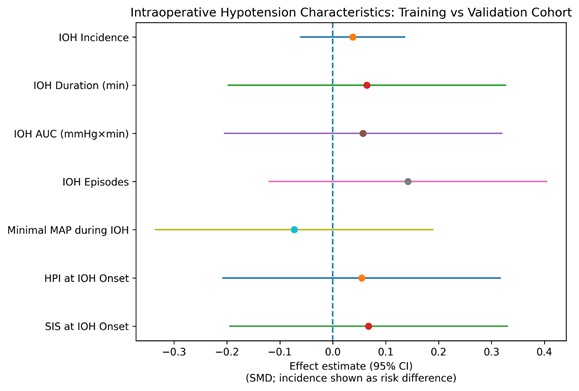
Methods: We conducted a prospective observational study across three tertiary care centers, enrolling 450 adult patients undergoing moderate-to-high risk non-cardiac surgery. Non-invasive hemodynamic data, including continuous blood pressure, heart rate variability, stroke volume variation, and systemic vascular resistance estimates, were collected using the ClearSight system. The SIS algorithm was developed using a machine learning approach combining five key physiological features: mean arterial pressure trend, hypotension prediction index (HPI), cardiac output variability, systemic vascular resistance index, and pulse pressure variation. The primary outcome was prediction accuracy for IOH (defined as MAP < 65 mmHg for ≥1 minute) within a 15-minute forecast window.
Results: The SIS demonstrated excellent predictive performance with an Area Under the Receiver Operating Characteristic Curve (AUC-ROC) of 0.94 (95% CI: 0.91-0.97), significantly outperforming individual parameters. At optimal threshold (SIS > 65), sensitivity was 89.2%, specificity 85.7%, positive predictive value 82.3%, and negative predictive value 91.4%. The score enabled a 52.3% reduction in IOH duration compared to standard monitoring.
Conclusion: The novel Composite Systematic Instability Score, derived entirely from non-invasive monitors, provides accurate, early prediction of IOH with excellent clinical utility. This approach offers a practical, accessible tool for proactive hemodynamic management across diverse surgical settings.
Graphical Abstract
Keywords
Subjects