Impact of Implementing a Surgical Anatomy Study Guide on Knowledge Level of Operating Room Technology Students: An Assessment of Knowledge Changes

Document Type : Original Article

Authors

1 Educator, Operating Room Technology Department, Alborz University of Medical Sciences, Karaj, Iran

2 MSc, Operating Room Technology Department, Alborz University of Medical Sciences, Karaj, Iran.

10.22034/jampbr.2026.597723.1116
Abstract
Introduction: Surgical anatomy is central to safe perioperative practice, yet evidence on how it is best taught to operating room technology students remains limited. Structured study guides are promising tools for improving retention and clinically oriented learning, but their effectiveness in this specific learner population is understudied. This study therefore assessed the effect of implementing a surgical anatomy study guide on operating room technology students’ knowledge level.

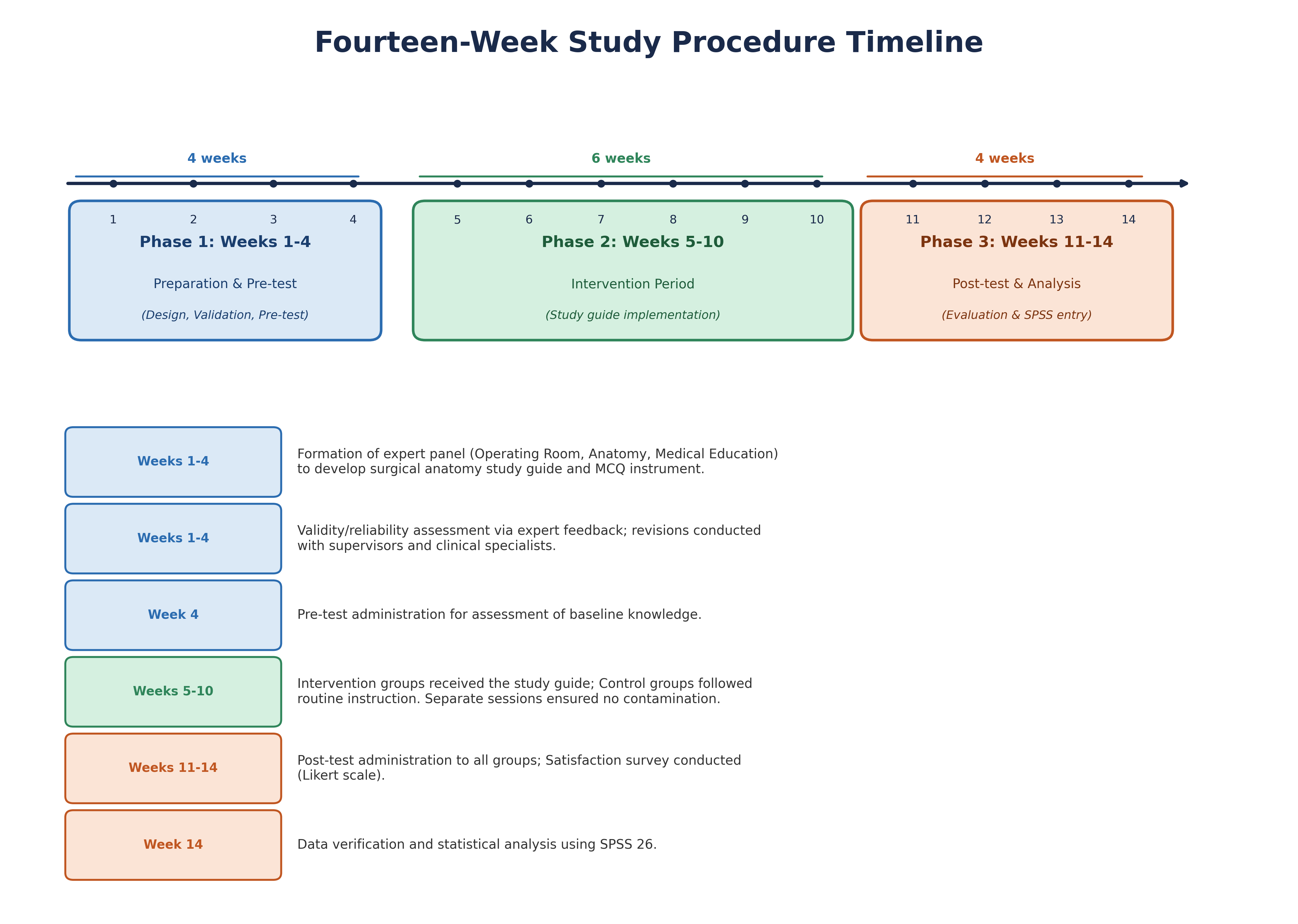
Material and methods: This interventional study employed a Solomon four-group design among 60 undergraduate operating room technology students selected through census sampling. Participants were randomly assigned to intervention or control groups. Intervention groups received a surgical anatomy study guide during a six-week clinical training period, whereas controls followed routine instruction. Knowledge was assessed using 20-item multiple-choice tests administered before and after the intervention.

Results: Knowledge scores were higher in the intervention groups than in the control groups, with the highest mean observed in the intervention-only group (25.50±7.044 vs 13.50±3.564, 11.82±2.183, and 21.80±6.361). Among pre-tested participants, MCQ scores were significantly higher in the intervention group than in the control group (mean difference=−9.98; t=−4.97, df=24, p<0.001), while variance homogeneity was not significantly violated (Levene’s F=4.17, p=0.052).

Conclusion: Implementing a surgical anatomy study guide significantly improved the knowledge level of operating room technology students, as evidenced by markedly higher MCQ scores in the intervention groups compared with controls. These findings support integrating structured study guides into operating room technology education. Further research with larger samples and longitudinal designs is recommended.

Keywords

Subjects


Articles in Press, Accepted Manuscript
Available Online from 19 August 2026