Impact of a Surgical Anatomy Study Guide on Student Satisfaction: A Study Among Surgical Technology Students

Document Type : Original Article

Authors

1 Educator, Operating Room Technology Department, Alborz University of Medical Sciences, Karaj, Iran

2 MSc, Operating Room Technology Department, Alborz University of Medical Sciences, Karaj, Iran.

10.22034/jampbr.2026.597724.1117
Abstract
Introduction: Student satisfaction is a key indicator of educational quality in health professions training, particularly in surgical technology, where learners must integrate anatomical knowledge with clinical practice. Structured study guides may support self-directed learning, improve clarity, and strengthen the learning experience. This study aimed to evaluate the impact of a surgical anatomy study guide on student satisfaction among surgical technology students

Material and methods: This quasi-experimental study used a Solomon four-group design to examine the effect of a surgical anatomy study guide on student satisfaction among 60 undergraduate surgical technology students. Participants were selected by census and randomly allocated to intervention and control groups. The intervention groups received the study guide during clinical training, and satisfaction was assessed after the rotation using a validated questionnaire.

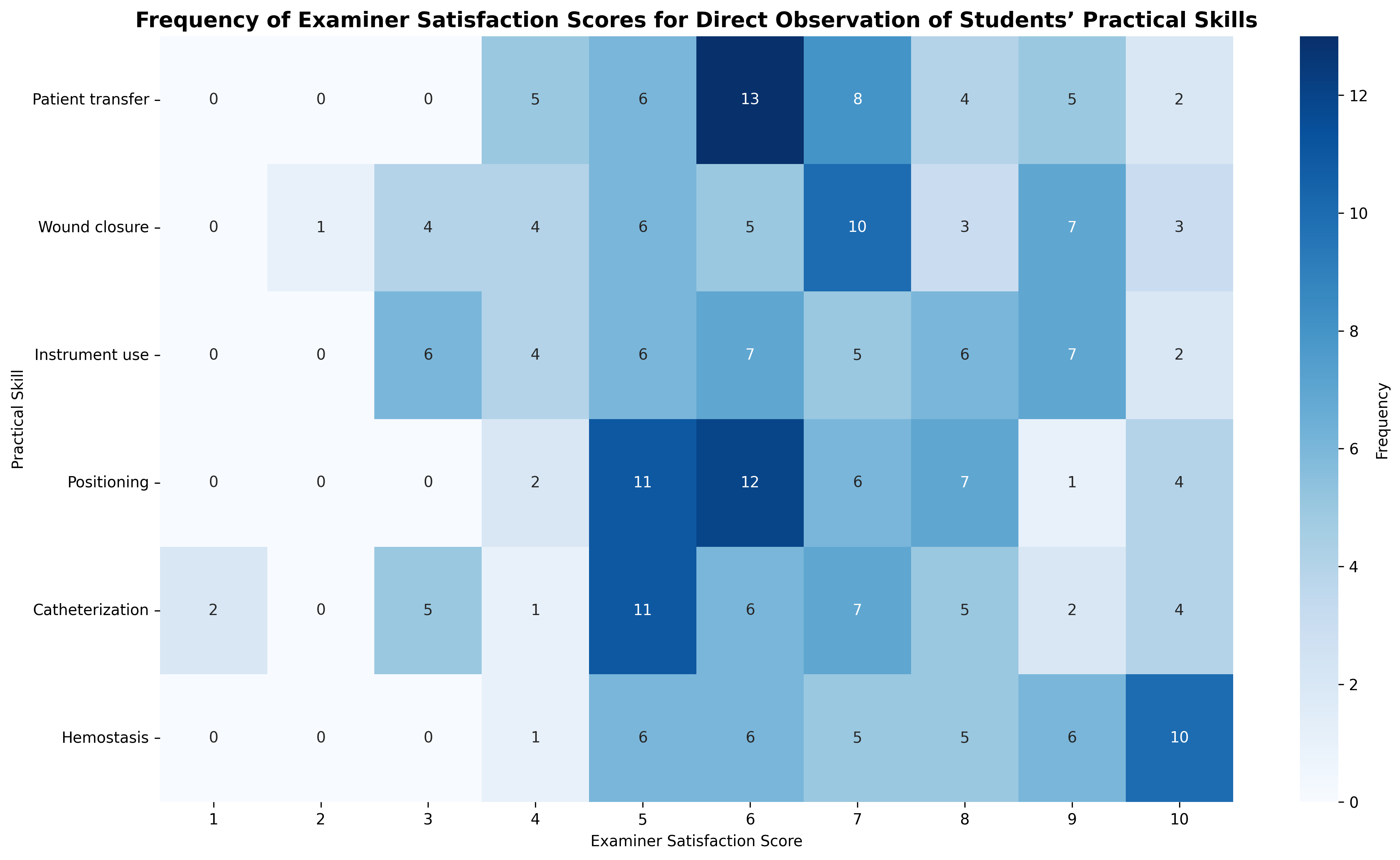
Results: Examiner satisfaction was generally favorable across practical skills, with mid-to-high scores predominating in direct observation, especially for hemostasis, patient transfer, and positioning, while catheterization showed greater variability. In the four study groups, satisfaction was higher and more homogeneous in the control groups than in the intervention groups (higher median scores and tighter dispersion), suggesting that the surgical anatomy study guide did not uniformly increase subjective satisfaction.

Conclusion: The surgical anatomy study guide appears to have influenced students’ learning experience in a complex way rather than producing a simple rise in satisfaction. Although practical performance was acceptable overall, the lower and more variable satisfaction in the intervention groups suggests that the guide may have increased cognitive demand and self-awareness during training.

Keywords

Subjects


Articles in Press, Accepted Manuscript
Available Online from 19 August 2026