Volume & Issue: Volume 3, Issue 2, March and April 2026 
Number of Articles: 3

Association Between Preoperative Serum Prostate-Specific Antigen Levels and Gleason Score in Patients Undergoing Radical Prostatectomy for Prostate Adenocarcinoma

Pages 161-169

https://doi.org/10.22034/jampbr.2026.605443.1135

Elyar Nezafati, Parisa Mehrasa

Abstract Introduction: Prostate cancer risk stratification relies heavily on preoperative serum prostate-specific antigen (PSA) levels and definitive histopathological grading. Although these metrics are fundamental to surgical decision-making, the consistency of their relationship warrants ongoing validation. Therefore, this study aims to assess the association between preoperative serum prostate-specific antigen levels and Gleason score in patients undergoing radical prostatectomy for prostate adenocarcinoma.

Material and methods: This cross-sectional study at Imam Reza Hospital, Tabriz, enrolled 120 patients via convenience sampling. We evaluated the correlation between preoperative serum prostate-specific antigen (PSA) levels and histopathological Gleason scores in men undergoing radical prostatectomy for adenocarcinoma. Clinical and pathological data were retrospectively collected from medical records, and appropriate statistical analyses were performed to determine the association between these variables.

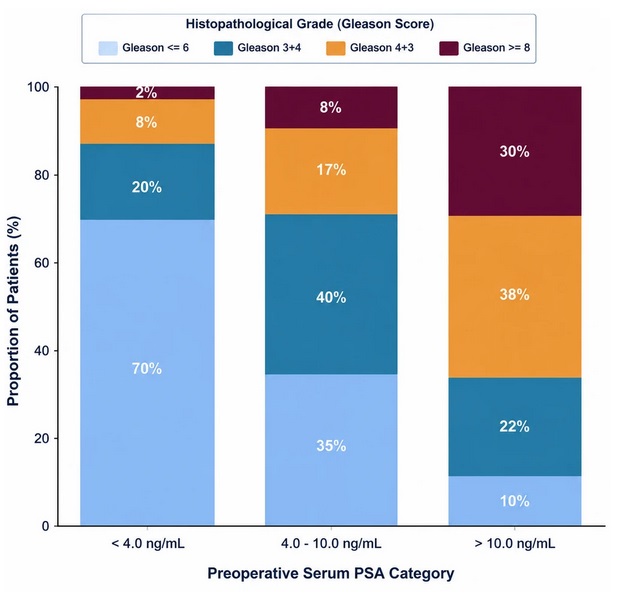
Results: In this cohort of 120 patients, preoperative serum PSA demonstrated a significant positive linear correlation with radical prostatectomy Gleason scores (r=0.58, P<0.001). Receiver operating characteristic curve analysis confirmed strong discriminative capacity for high-grade disease (AUC=0.84), identifying an optimal predictive cut-off of 10.2 ng/mL (sensitivity 81.5%, specificity 76.8%). Furthermore, higher PSA tiers consistently corresponded to an increased proportional distribution of aggressive pathological histotypes compared to lower biomarker categories.

Conclusion: Preoperative serum PSA serves as a reliable, non-invasive biomarker for histological risk stratification in patients undergoing radical prostatectomy. Given its strong association with adverse Gleason scores and high discriminative diagnostic accuracy, preoperative PSA levels effectively identify candidates requiring intensified oncological evaluation.
Dosimetric Predictors and Risk Factors for Vertebral Column Degeneration and Paraspinal Neuropathic Pain Following Radiotherapy in Breast Cancer Patients

Pages 170-180

https://doi.org/10.5281/zenodo.23995545

Seyed Taher Mousavi, Ali Reza Nasseri

Abstract Introduction: Adjuvant breast radiotherapy frequently delivers off-target doses to the axial skeleton and paraspinal soft tissues, inducing insidious osteoskeletal degeneration and chronic neuropathic pain. Despite their clinical relevance, dosimetric thresholds governing these late sequelae remain poorly defined. This prospective study aimed to identify specific dosimetric predictors and independent clinical risk factors associated with vertebral degeneration and paraspinal neuropathic pain in breast cancer survivors.

Material and methods: This prospective observational cross-sectional study at Shahid Madani Hospital investigated 175 breast cancer survivors sampled via convenience methods, evaluating cervicothoracic musculoskeletal and neurological disorders through standardized clinical examinations, functional assessments, and dosimetric data analysis.

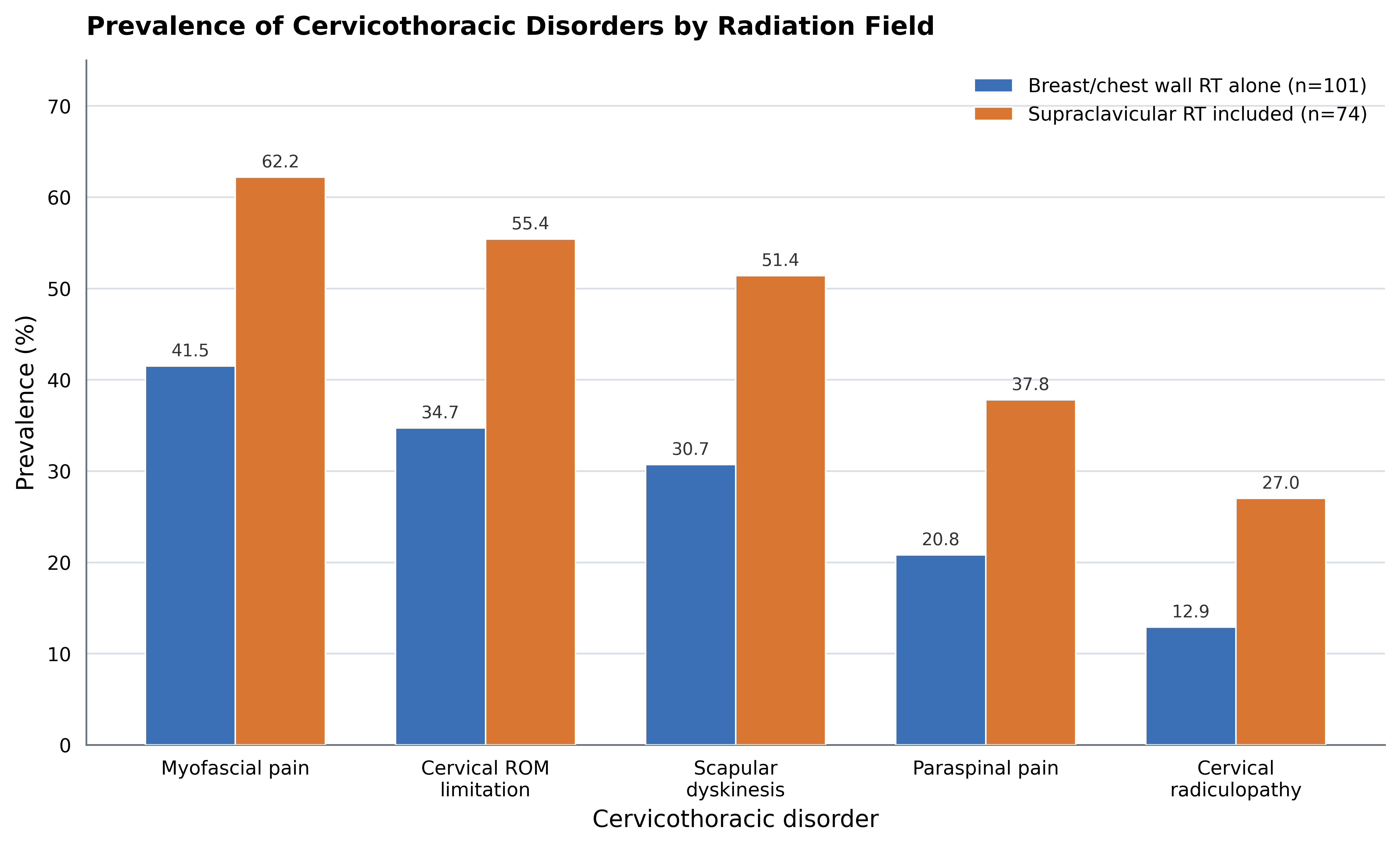
Results: This study revealed a high prevalence of cervicothoracic disorders in breast cancer survivors (myofascial pain: 50.3%; cervical ROM limitation: 43.4%), with supraclavicular irradiation (adjusted OR = 2.87, P = 0.003) and axillary dissection (adjusted OR = 2.18, P = 0.024) identified as significant independent risk factors.

Conclusion: Radiation therapy and surgical interventions for breast cancer significantly increase the burden of cervicothoracic musculoskeletal and neurological morbidities. Optimizing radiation field design and minimizing paraspinal exposure are crucial to improving long-term survivorship quality of life.

Neurological and Spinal Manifestations of Deep Infiltrating Endometriosis: Diagnostic Challenges, Surgical Management, and Neurological Outcomes—A Systematic Review

Pages 181-187

https://doi.org/10.5281/zenodo.24203207

Ali Mohamadi Moghadam, Elham Mohammadi Moghadam, Maryam Milanifard

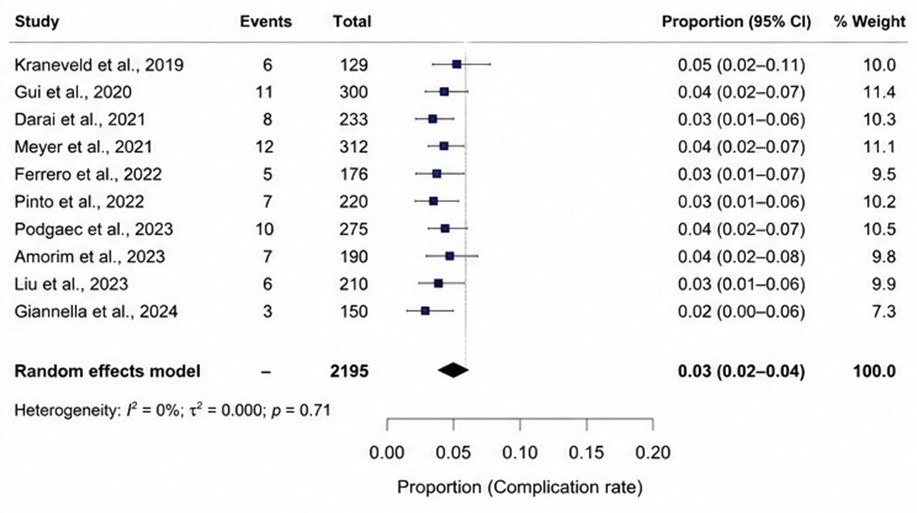
Abstract Deep infiltrating endometriosis (DIE) is a complex form of endometriosis characterized by lesions that extend into underlying tissues and may involve pelvic structures adjacent to peripheral nerves, nerve roots, and, exceptionally, the spinal canal. Neurological manifestations include cyclical sciatica, lumbosacral pain, sensory disturbances, muscle weakness, gait impairment, and, in rare cases, symptoms associated with spinal or intramural lesions. Because these manifestations overlap with common musculoskeletal and neurological disorders, diagnosis delayed, potentially allowing progressive nerve injury and persistent functional impairment. This systematic review aims to synthesize the available evidence concerning the clinical presentation, diagnostic evaluation, surgical management, and neurological outcomes of endometriosis involving neural and spinal structures. Relevant literature considered across four domains: neurological phenotypes and anatomical distribution, diagnostic imaging and differential diagnosis, surgical approaches and multidisciplinary management, and postoperative neurological recovery and recurrence. Magnetic resonance imaging (MRI), particularly dedicated pelvic and lumbosacral protocols, plays an important role in identifying neural involvement and defining lesion extent. However, imaging findings interpreted alongside symptom chronology, neurological examination, and histopathological assessment when tissue obtained. Surgical management may require advanced gynecological, neurosurgical, and peripheral nerve expertise, with individualized decisions balancing lesion removal, pain relief, preservation of neurological function, and reproductive goals. Published evidence suggests that pain and functional improvement are possible after appropriate treatment, although motor recovery incomplete when nerve damage is longstanding. Interpretation remains limited by the rarity of these manifestations, heterogeneous reporting, and the predominance of case reports and retrospective series. Consequently, quantitative pooling of neurological outcomes is not justified without sufficiently comparable patient-level data. This review highlights the need for earlier recognition, standardized neurological outcome measures, multidisciplinary referral pathways, and prospective studies to establish evidence-based diagnostic and therapeutic strategies.